San Francisco’s First Campus-Scale Alternate Water System
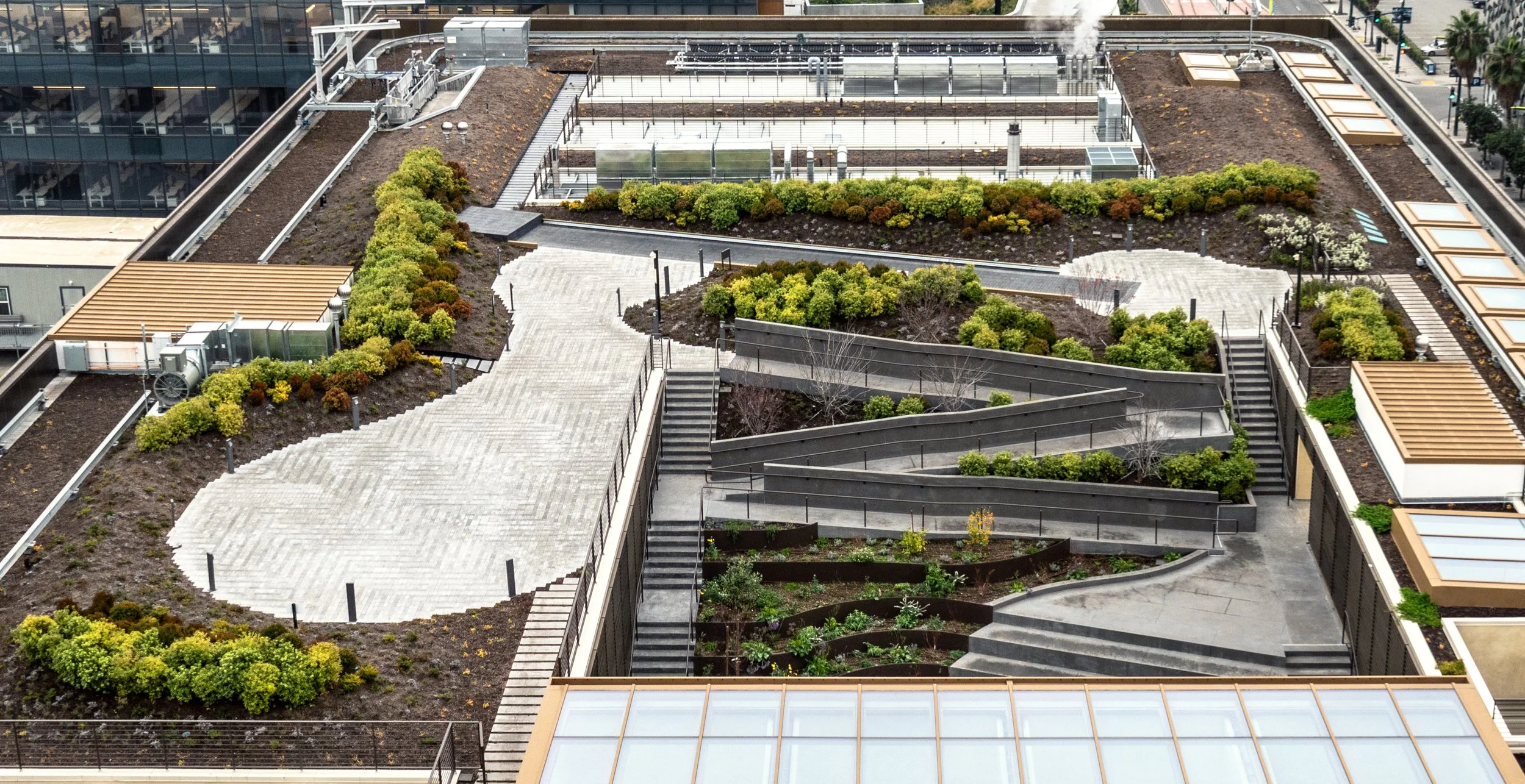
At 1455 and 1515 Third Street, two large office buildings support roughly 3,500 employees across more than 400,000 square feet. At the center of this campus is 1515 Third Street, a seven-story building that now anchors San Francisco’s first campus-scale alternate water system.
Like most corporate campuses, a significant portion of water use goes toward non-drinking applications such as toilet flushing and irrigation.
The question was simple: What if that demand did not rely entirely on potable city water?
A Campus-Level Vision
The campus was designed with an integrated alternate water system that captures and treats both greywater and rainwater.
Rather than designing two independent systems, the strategy centered on a shared approach. Greywater and rainwater from both buildings are routed to a centralized treatment system located within 1515 Third Street. Once treated, the water is redistributed for non-potable uses across the campus.
1515 Third Street houses the treatment infrastructure that makes the entire campus strategy possible.
Designed for Scale
This large campus represents a significant daily water demand. Designing a system that could reliably offset potable water use at this scale required thoughtful integration, coordination with city agencies, and long-term performance planning.
Impact
The results speak clearly:
Average potable water savings of approximately 40%
Peak monthly savings of 63%
Even during lower-performing months, savings remained around 27%
67% of the alternate supply comes from greywater
33% from rainwater
This means the system is not dependent solely on rainfall. It is driven primarily by water already being used within the buildings and responsibly recaptured.
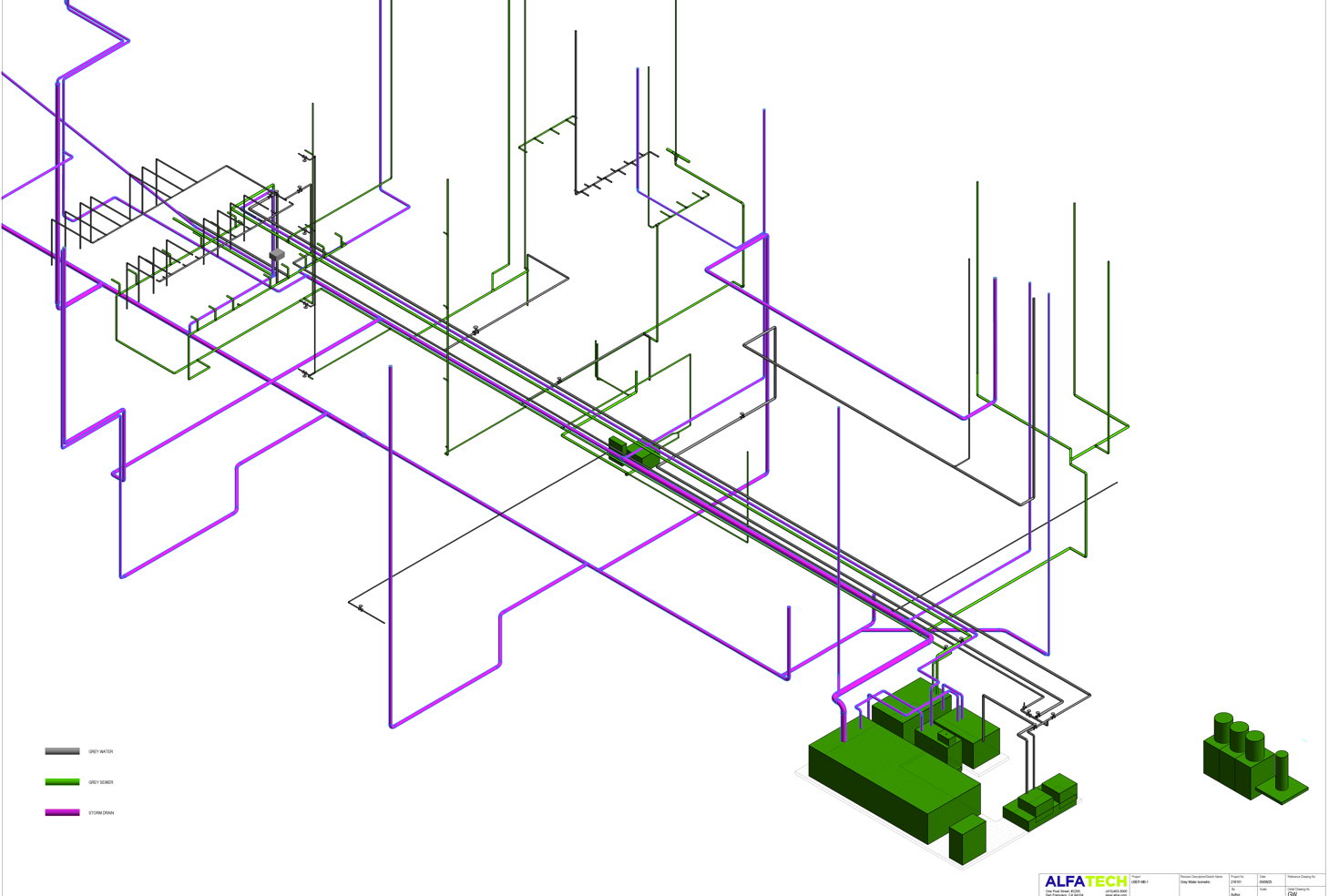
A 3D view of the water reuse system. The lines represent piping that collects greywater and rainwater from across the campus, routes it to a central treatment system, and redistributes it for uses like toilet flushing and irrigation.
A Milestone for San Francisco
As of January 7, 2026, the system entered final operational mode and achieved full regulatory compliance.
This marks a significant milestone: San Francisco’s first campus-scale alternate water system.
It also reflects years of collaboration between Uber, AlfaTech, equipment partners, and city agencies, including the San Francisco Public Utilities Commission and the San Francisco Department of Public Health.
Why It Matters
Urban campuses are growing denser, sustainability goals are becoming more ambitious, and cities are tightening water conservation requirements. You may have heard about the water-energy-food nexus: Every gallon of water reused on campus results in more kWh energy savings by avoiding pumping water to the site. Irrigating crops grown on-site with recycled water and then used in the culinary program, additional CO2 savings are achieved by reducing the number of food transports required to the site.
On-site water reuse is now viable, scalable, and measurable.
This project demonstrates what is possible when engineering design aligns with long-term environmental responsibility. By reducing reliance on potable water and creating a campus-wide reuse ecosystem, this Mission Bay campus sets a precedent for future developments across the city.